Learn what KYC means in crypto, why exchanges ask for your ID, how the verification process works, whether KYC is safe, and which crypto platforms require it in 2026.
What Does KYC Mean in Crypto?
You’re ready to buy, sell, or withdraw cryptocurrency.
You download a crypto app, create an account, and then suddenly you’re asked to upload your ID and take a selfie.
If you’ve ever wondered why crypto platforms require this information, the answer is simple: KYC.
KYC stands for “Know Your Customer.” It is an identity verification process that crypto exchanges and financial platforms use to confirm that users are who they claim to be.
KYC has become a standard requirement across the cryptocurrency industry as governments and regulators continue to introduce rules aimed at preventing fraud, money laundering, and other financial crimes.
In this guide, you’ll learn exactly what KYC means in crypto, why it’s required, how the process works, and whether it’s safe to share your information with crypto platforms.
What Is KYC in Cryptocurrency?
KYC (Know Your Customer) is a verification process used by crypto exchanges to confirm the identity of their users before allowing access to certain services.
Most crypto platforms will ask for information such as:
- Full name
- Date of birth
- Residential address
- Government-issued identification
- Selfie or facial verification
The purpose of KYC is to ensure that users are legitimate individuals and not criminals attempting to use cryptocurrency for illegal activities.
Think of it like opening a bank account. Just as banks ask for identification before providing services, crypto exchanges use KYC to verify customers and comply with financial regulations.
Why Do Crypto Apps Ask for Your ID?
Many people are surprised when a crypto app requests personal documents. However, there are several important reasons behind this requirement.
1. To Prevent Fraud and Financial Crime
One of the primary reasons for KYC is to reduce illegal activities such as:
- Money laundering
- Identity theft
- Fraud
- Terrorist financing
- Stolen fund transfers
Without identity verification, criminals could easily create anonymous accounts and move funds without being detected.
By verifying users, crypto platforms create a safer environment for everyone.
2. To Comply With Government Regulations
Crypto exchanges are now regulated in many countries around the world.
To operate legally, platforms must follow Anti-Money Laundering (AML) and Know Your Customer (KYC) requirements.
Failure to comply can result in:
- Heavy fines
- Regulatory penalties
- Operating restrictions
- License revocations
This is why major exchanges require identity verification before users can access certain services.
3. To Protect Legitimate Users
KYC helps reduce fake accounts and impersonation scams.
By ensuring that every user is verified, crypto platforms can:
- Improve account security
- Prevent identity fraud
- Reduce scam activity
- Protect customers from unauthorized access
The result is a safer trading environment for genuine users.
4. To Unlock More Platform Features
Many exchanges allow basic account creation without full verification.
However, users often need KYC to access:
- Fiat deposits
- Fiat withdrawals
- Higher transaction limits
- Advanced trading features
- Crypto cash-out services
Completing verification usually unlocks the full functionality of the platform.
5. To Prevent Multiple Fake Accounts
Some users attempt to create multiple accounts to exploit referral bonuses, promotions, or trading incentives.
KYC helps exchanges prevent abuse by ensuring each user has only one verified identity.
How KYC Verification Works in Crypto
The KYC process is usually straightforward and takes only a few minutes.
Step 1: Create an Account
Register using your email address or phone number.
Step 2: Enter Your Personal Information
You’ll typically provide:
- Full legal name
- Date of birth
- Residential address
- Nationality
Make sure all information matches your official documents.
Step 3: Upload a Government-Issued ID
Most crypto exchanges accept:
- National ID card
- Driver’s license
- International passport
To avoid delays:
- Use a clear image
- Ensure all text is visible
- Do not crop the document
- Make sure the ID is not expired
Step 4: Complete Facial Verification
Most platforms require a selfie or live face scan.
This helps confirm that:
- The ID belongs to you
- The document is genuine
- No one is attempting identity theft
Step 5: Wait for Approval
Verification times vary by platform.
Most approvals are completed within:
- A few minutes
- Several hours
- Up to 24 hours in some cases
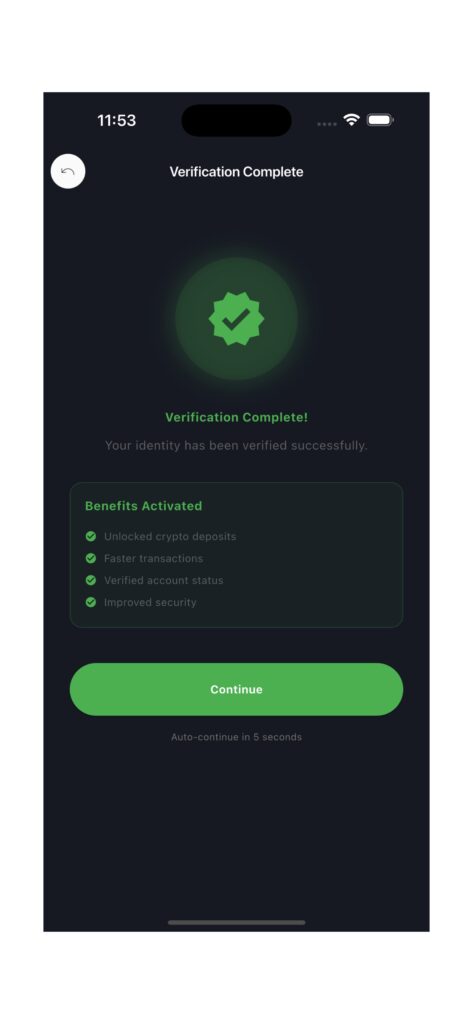
Once approved, you’ll gain access to the platform’s full services.
Is KYC Safe in Crypto?
This is one of the most common concerns among crypto users.
The good news is that reputable crypto exchanges use advanced security measures to protect customer data.
These measures often include:
- Data encryption
- Secure servers
- Multi-factor authentication
- Regulatory compliance standards
When using trusted platforms, KYC is generally considered safe.
What Happens to Your Data After KYC?
Your information is typically used for:
- Identity verification
- Fraud prevention
- Regulatory compliance
- Account protection
Importantly, completing KYC does not give a platform access to:
- Your crypto wallet
- Private keys
- Recovery phrases
- Personal funds
The verification process simply confirms your identity.
KYC Safety Tips Every Crypto User Should Know
Before uploading personal documents, follow these best practices:
Only Use Official Websites and Apps
Always verify that you’re using the official platform.
Avoid clicking unknown links sent through:
- Telegram groups
- WhatsApp messages
- Social media DMs
- Email scams
Never Share Your Documents Publicly
Do not send your ID documents to strangers or unofficial support accounts.
Legitimate exchanges will only request verification through secure channels.
Read the Privacy Policy
Before completing KYC, review the platform’s privacy policy to understand:
- How your data is stored
- How your information is used
- What security measures are in place
Crypto Platforms That Require vs Don’t Require KYC
Platforms That Require KYC (Full Verification)
| Platform | What They Do | KYC Required For |
|---|---|---|
| Cyla | Crypto cash-out app (Nigeria) | Full access to convert crypto to Naira |
| Binance | Largest global exchange | Trading, deposits, withdrawals |
| Bybit | Derivatives + spot trading | Higher limits + fiat services |
| KuCoin | Spot, staking, lending | Higher withdrawals + fiat services |
| Coinbase | Regulated US exchange | Any transaction |
Best for: Users who want reliable, regulated, full-featured crypto services.
Platforms That Allow No-KYC or Optional KYC (Decentralized)
| Platform | Network | How It Works |
|---|---|---|
| Uniswap | Ethereum | Connect wallet → swap |
| PancakeSwap | BNB Chain | Connect wallet → swap |
| dYdX | Ethereum (L2) | Connect wallet → trade futures |
| Jupiter | Solana | Connect wallet → swap |
| Kamino Finance | Solana | Connect wallet → stake/lend |
Can You Use Crypto Without KYC?
Yes.
Some decentralized exchanges (DEXs) allow users to trade directly from their wallets without identity verification.
Popular examples include:
- Uniswap
- PancakeSwap
- Jupiter
- dYdX
- Kamino Finance
These platforms prioritize privacy but come with trade-offs.
KYC vs No-KYC Crypto Platforms
| Feature | KYC Platforms | No-KYC Platforms |
|---|---|---|
| Fiat Deposits | Yes | No |
| Fiat Withdrawals | Yes | No |
| Customer Support | Yes | Limited |
| Account Recovery | Yes | No |
| Privacy | Moderate | High |
| Scam Risk | Lower | Higher |
| Beginner Friendly | Yes | Less Friendly |
For most beginners, KYC platforms provide a safer and more convenient experience.
Frequently Asked Questions (FAQs)
Why Do Crypto Exchanges Ask for My ID?
Crypto exchanges ask for identification to verify users, prevent fraud, comply with regulations, and protect customers.
How Long Does Crypto KYC Take?
Most KYC verifications are completed within a few minutes, although some platforms may take up to 24 hours.
Can I Buy Crypto Without KYC?
Yes. Some decentralized exchanges allow users to buy, sell, and swap crypto without identity verification.
Is KYC Mandatory for Crypto?
For most regulated crypto exchanges, KYC is mandatory before users can access certain services.
Does KYC Give Exchanges Access to My Wallet?
No. KYC only verifies your identity. It does not provide access to your wallet, private keys, or cryptocurrency holdings.
Final Thoughts
KYC has become a fundamental part of the cryptocurrency industry.
While uploading identification documents may seem inconvenient, the process helps create a safer environment for both users and crypto platforms.
KYC helps prevent fraud, reduce scams, improve security, and ensure compliance with financial regulations.
If you’re using a trusted crypto exchange, completing KYC verification gives you access to more features, higher transaction limits, and a smoother crypto experience.
For users looking to buy, sell, or cash out cryptocurrency safely, KYC is no longer optional on most regulated platforms—it’s an essential step toward secure crypto transactions.
Ready to get verified and start cashing out?
Download Cyla today.