You’re signing up for a crypto app.
Then it asks: upload your ID. Take a selfie.
That’s KYC in action.
As of 2026, 92% of centralized crypto exchanges globally are fully KYC compliant — up from 85% in 2025.
But you might still wonder: What exactly is KYC? And why do I need to do it before buying, selling, or withdrawing crypto?
Let’s break it down.
What Is KYC in Crypto?
KYC stands for “Know Your Customer.”
It’s a process crypto platforms use to verify your identity. Think of it like showing your ID before entering a secure area.
Most crypto exchanges want to know:
- Who you are (name, date of birth)
- Where you live (address)
- If your ID is real (passport, driver’s license, national ID)
This helps platforms stay compliant with global financial laws — and keeps users safe.
Without KYC, some platforms won’t let you deposit, trade, or withdraw large amounts of crypto.
Why KYC Is Required on Crypto Platforms
1. To Prevent Financial Crimes
KYC stops bad actors from using crypto for fraud, money laundering, or terrorism financing.
Without KYC, someone could open an anonymous account and move stolen funds across borders. Identity checks make it that much harder.
2. To Follow Global Regulations
Countries now have strict rules for crypto platforms — similar to traditional banking.
Exchanges like Cyla, Binance, and Coinbase must verify users to remain legally compliant. If they don’t? Fines or bans.
Think of it like a bank asking for ID before opening an account.
3. To Protect Honest Users
Verifying every user reduces impersonation, fake profiles, and scams.
Is someone trying to pretend to be you to trick others? KYC makes that a lot harder. Safer environment for everyone.
4. To Unlock More Features
Most platforms let you explore basic features without KYC.
But to withdraw fiat (Naira or dollars), deposit larger amounts, or access advanced tools? You’ll need to verify.
5. To Prevent Multiple Fake Accounts
KYC stops people from creating ten fake accounts to exploit sign-up bonuses or manipulate markets.
How KYC in Crypto Works (Step-by-Step)
Step 1: Create an Account
Sign up with your email address or phone number.
Step 2: Fill in Your Personal Details
Provide your full name, date of birth, residential address, and sometimes occupation.
Step 3: Upload Your ID Documents
Valid ID: National ID card, driver’s license, or international passport.
Tip: Make sure it’s clear, uncropped, and not expired. Blurry photos or outdated IDs delay the process.
Step 4: Take a Selfie or Complete a Face Scan
To confirm you’re really the person in the ID, most platforms ask for a live selfie or face scan.
Step 5: Wait for Verification
Review takes anywhere from a few minutes to a few hours.
If there’s an issue (mismatched info, unclear image), you may be asked to try again.
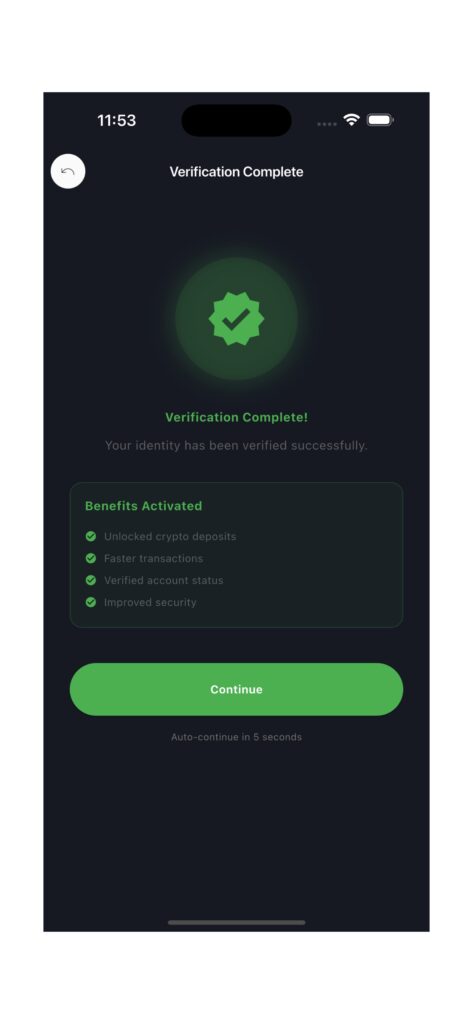
That’s it. Once approved, you unlock fiat deposits, withdrawals, and higher trading limits.
Is KYC in Crypto Safe? What Happens to Your Data?
Valid concern. Here’s what you should know:
1. Reputable Platforms Use Secure Systems
Trusted apps like Cyla, Binance, and Coinbase protect your information with advanced encryption and bank-level security.
2. Your Wallet Stays Private
KYC is only about verifying your identity. It does NOT give platforms access to your crypto wallet, private keys, or control over your funds.
3. Privacy Policies Are in Place
Licensed exchanges follow strict privacy rules and won’t sell or misuse your data. Still smart to read the privacy policy.
⚠️ Be Extra Cautious
- Upload your ID only through official websites or apps
- Never share sensitive documents in Telegram groups or sketchy links claiming “quick verification.”
Bottom line: KYC is safe when you use trusted platforms and stay alert.
Crypto Platforms That Require vs Don’t Require KYC
Platforms That Require KYC (Full Verification)
| Platform | What They Do | KYC Required For |
|---|---|---|
| Cyla | Crypto cash-out app (Nigeria) | Full access to convert crypto to Naira |
| Binance | Largest global exchange | Trading, deposits, withdrawals |
| Bybit | Derivatives + spot trading | Higher limits + fiat services |
| KuCoin | Spot, staking, lending | Higher withdrawals + fiat services |
| Coinbase | Regulated US exchange | Any transaction |
Best for: Users who want reliable, regulated, full-featured crypto services.
Platforms That Allow No-KYC or Optional KYC (Decentralized)
| Platform | Network | How It Works |
|---|---|---|
| Uniswap | Ethereum | Connect wallet → swap |
| PancakeSwap | BNB Chain | Connect wallet → swap |
| dYdX | Ethereum (L2) | Connect wallet → trade futures |
| Jupiter | Solana | Connect wallet → swap |
| Kamino Finance | Solana | Connect wallet → stake/lend |
Tradeoffs of no-KYC platforms:
- ❌ No fiat deposits or withdrawals
- ❌ No customer support or password recovery
- ❌ Higher risk of scams
- ✅ Greater privacy and anonymity
Comparison: KYC vs No-KYC
| Feature | KYC Platforms (Cyla, Binance) | No-KYC (Uniswap, PancakeSwap) |
|---|---|---|
| Fiat withdrawal (Naira) | ✅ Yes | ❌ No |
| Customer support | ✅ Yes | ❌ No |
| Password recovery | ✅ Yes | ❌ No (wallet only) |
| Privacy | Medium | High |
| Scam risk | Low | Higher |
| Best for | Cashing out, large trades | Anonymous trading, DeFi |
FAQs (Quick Answers)
| Question | Answer |
|---|---|
| Why do crypto apps need my ID? | To comply with regulations, prevent fraud, and protect users. |
| Can I use crypto without KYC? | Yes — on DEXs like Uniswap. But you can’t withdraw fiat. |
| How long does KYC take? | 5 minutes to 24 hours (depends on platform). |
| Is my data safe after KYC? | Yes — on trusted, licensed platforms with encryption and privacy policies. |
Bottom Line
KYC in crypto might feel like a hassle. But it plays a major role in keeping users and platforms safe.
It prevents scams. Ensures compliance. It gives you full access to everything a crypto exchange offers.
If you’re in Nigeria and want a simple way to sell crypto, Cyla makes KYC fast, secure, and stress-free.
Once verified, cash out your crypto in minutes. No complicated processes. No P2P risks.
Ready to get verified and start cashing out?
Download Cyla today.