Ever sent Bitcoin and just… stared at your screen waiting?
You’re not alone.
Crypto transaction verification feels mysterious. But here’s what actually happens behind the scenes after you click “send.”
No bank. No central authority. Just thousands of computers agreeing on the truth.
Let’s break it down.
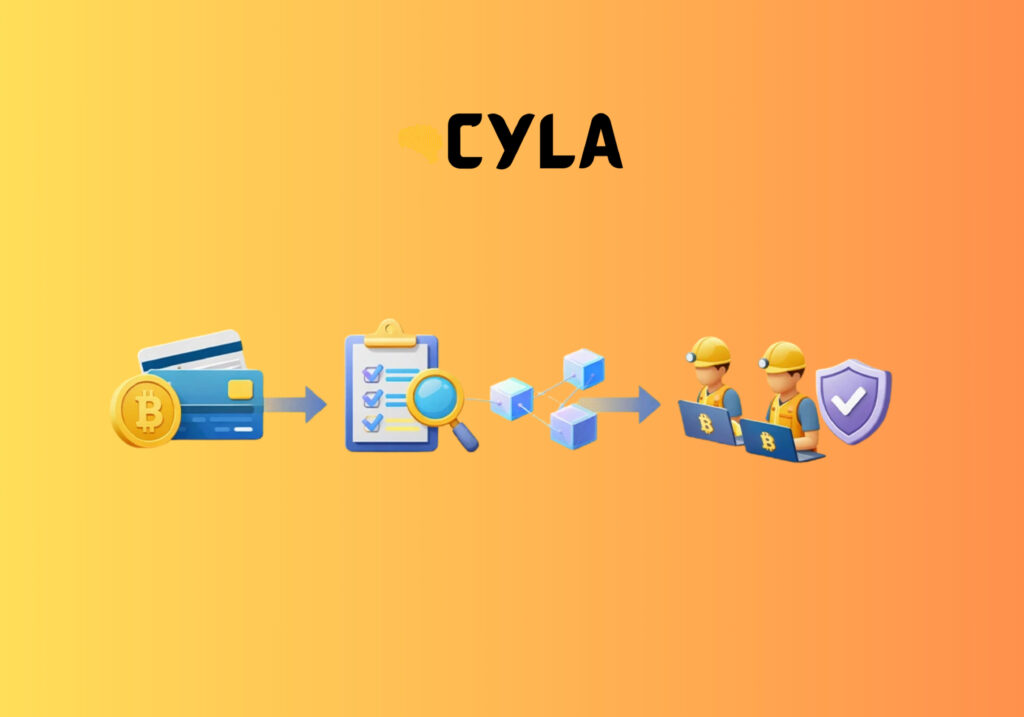
What Does Transaction Verification Mean in Crypto?
With a bank? They check your balance and approve the transfer. Simple.
With crypto? There’s no bank.
Instead, thousands of computers worldwide (called nodes) work together to agree on which transactions are valid. That’s verification.
It solves the double-spend problem — stopping someone from sending the same Bitcoin to two different people.
In a decentralized system with no single boss, verification keeps everyone honest.
Step-by-Step: How a Crypto Transaction Gets Verified
Here’s what happens from the moment you hit “send” to when your recipient gets their funds.
Step 1: Transaction Is Created & Signed
Your wallet has two keys:
- Public key (like your account number)
- Private key (like your secret PIN)
When you send, your wallet uses your private key to create a digital signature — proving you authorized it without revealing your key.
Step 2: Transaction Is Broadcast to the Network
Your wallet sends the transaction to nearby nodes. They pass it along. Within seconds, your transaction has spread across thousands of computers globally.
Step 3: Nodes Validate the Details
Nodes check:
- Is the signature valid?
- Do you actually own these funds?
- Haven’t you already spent them elsewhere?
Fail any check? Rejected immediately.
Step 4: Transaction Enters the Mempool
Think of the mempool as a waiting room. All verified but unconfirmed transactions sit here, visible to everyone. Miners and validators pick from this pool.
Step 5: Miners/Validators Select & Confirm It
They pick transactions — usually prioritizing higher fees — and bundle them together to propose the next block.
Step 6: Transaction Is Added to a Block
Once a miner proposes a valid block, your transaction is officially confirmed. The block permanently records it with timestamps and links to the previous block.
Step 7: Block Is Added to the Blockchain
The new block attaches to the chain. Every node updates its copy. Your transaction is now permanent, irreversible, and recorded forever.
Your recipient’s balance updates. Done.
How Long Does Crypto Transaction Verification Take?
It depends on the blockchain and network conditions.
| Blockchain | Block Time | Typical Confirmation |
|---|---|---|
| Bitcoin | ~10 minutes | 10–60 min (6 confirmations ≈ 1 hour) |
| Ethereum | ~12 seconds | A few minutes |
| Solana | <1 second | Near-instant |
| XRP (Ripple) | 3–5 seconds | Seconds |
3 Factors That Affect Speed:
- Network congestion – More users = longer waits
- Transaction fees – Higher fees = faster processing
- Blockchain type – Each chain has its own rhythm
Common Issues With Transaction Verification
Why Transactions Get Stuck
Low fee is the #1 reason. If your fee is below what miners accept, your transaction sits in the mempool forever — skipped over for higher-paying ones.
Low Fees + Network Congestion
During market moves, protocol launches, or token drops? Everyone competes for block space. Even reasonable fees can face delays.
Failed or Dropped Transactions
If a transaction sits too long, nodes may drop it entirely. Your funds aren’t lost — they just return to your wallet like nothing happened.
How to Fix a Stuck Transaction
Two practical solutions:
- Replace-by-Fee (RBF) – Resubmit the same transaction with a higher fee
- Child Pays for Parent (CPFP) – Send a new transaction with a high fee that incentivizes miners to process both
Best way to avoid issues? Always check current network fees before sending. Use your wallet’s recommended fee during busy periods.
Bottom Line
Crypto transaction verification sounds complicated. But it’s really just thousands of computers agreeing on the truth.
From your private key signature to the block being sealed forever — every step exists to protect you and everyone else on the network.
Understand the process. Use it safely. Move with confidence.
FAQs
Can a crypto transaction be reversed after verification?
No. Once confirmed and added to the blockchain, it’s permanent and irreversible.
What if I send crypto to the wrong address?
Can’t reverse it. Only the recipient can send it back — and you can’t force them. Always double-check the full address.
How many confirmations does a transaction need?
- Bitcoin: ~6 confirmations (≈1 hour)
- Ethereum: 12–35 confirmations (platform dependent)
- Solana/XRP: Often just 1 confirmation
Why is my transaction pending for hours?
Almost always: fee too low for current network conditions, or extreme congestion. Check the mempool status for that blockchain.
Ready to Cyla?
Convert crypto to cash instantly. Join 100,000+ users making crypto spendable anytime.